
November is Men's Mental Health Awareness Month - But this matters every month
49,069 Americans died by suicide in 2025.
That's approximately 134 people every single day.
Here in Colorado, 1,304 people died by suicide last year. Our suicide death rate was 52% higher than the national average, placing Colorado sixth-highest among U.S. states.
And right here in Boulder County, the Coroner's Office recorded 60 suicide deaths in 2025.
Men continue to account for approximately 80% of U.S. suicide deaths, dying by suicide at roughly four times the rate of women, according to the latest finalized sex-specific figures.
And those are just the deaths.
The latest national survey found that in 2025, an estimated 13.9 million American adults seriously considered suicide, 4.9 million made a suicide plan, and 2.3 million attempted suicide.
Veterans face an especially troubling reality. According to the VA's September 2026 report, 6,488 U.S. veterans died by suicide in 2024, and male veterans had a suicide rate 56.5% higher than non-veteran men, after adjusting for age.
And what about entrepreneurs?
Research led by Michael Freeman found that 49% of entrepreneurs surveyed reported a lifetime mental health condition, compared with 32% of non-entrepreneurs. That's approximately 50% higher in that study.
While we don't have reliable national numbers establishing how much more likely entrepreneurs are to die by suicide, the mental health challenges associated with building businesses deserve far more attention than they receive.
And according to a World Health Organization update published just this month, an estimated 746,000 people die by suicide globally each year.
Take a moment to consider the sheer magnitude of these numbers.
These aren't just statistics. They're our friends, colleagues, neighbors, brothers, fathers and sons.
And this is deeply personal to me.
It’s time we end the stigma.
I've been an outspoken advocate for mental health and wellbeing in the entrepreneurial ecosystem since 2014, when I began publicly sharing my own struggles with stress, anxiety, burnout, founder fallouts, and the experience of pushing myself so hard that I ultimately ended up in the hospital.
I used to believe that being a strong leader meant pushing through anything. Work harder. Hustle harder. Keep going. Don't let anyone see you struggle.
Turns out, that approach can come at an enormous cost.
It took some extraordinarily difficult experiences to learn that you CAN build successful businesses, take care of yourself, and live a healthy, meaningful life.
In fact, I believe self-care needs to come FIRST.
That's one of the reasons I've invested so much time and energy into Colorado's entrepreneurial community and, more recently, the Conscious Entrepreneur Community. We talk openly about building businesses in healthier, more conscious ways. About vulnerability, authenticity, self-care, community and genuine human connection.
And yet, last month, we lost someone to suicide within the Boulder entrepreneurial ecosystem who was also part of our Conscious Entrepreneur Community.
It was particularly shocking and heartbreaking.
This is a community where we actively encourage people to speak openly, ask for help, and build lives and businesses that put their wellbeing first.
It was a painful reminder that even in communities committed to these values, people can still be struggling in ways we may not fully understand.
I've spent more than fifteen years helping build and support Colorado's startup ecosystem. These are my people. It's a community I love deeply, and losing someone in this way really hits home.
Suicide has touched my life in profoundly personal ways. I'm not going to get into those experiences here, but they've made this subject especially important to me.
And if sharing some of what I've learned helps even one person feel less alone, then it's worth putting myself out there.
Vulnerability Begets Vulnerability
One of the most important things I've learned over the years is that when we're willing to be vulnerable about our own struggles, we create permission for others to do the same.
I've experienced this repeatedly.
When I started talking publicly about my own challenges, something pretty remarkable happened. Other entrepreneurs, executives, founders and friends began sharing things they'd been carrying around, sometimes for years.
Not because I had answers.
But because they finally felt safe enough to talk.
That's incredibly powerful.
And men, in particular, need more of it.
We've been conditioned in so many ways to be strong, self-reliant, successful, and to keep our shit together. To solve problems rather than admit we have them.
That needs to change.
I'll share something else quite openly: I've been in therapy for years.
I'm not embarrassed by that. Not one bit.
Therapy has helped me work through some extraordinarily difficult times, understand myself better, develop healthier habits, and navigate the inevitable challenges life throws at us.
I can't recommend it highly enough.
Why should we be any more ashamed of taking care of our mental health than we are of going to the gym or seeing a doctor?
We shouldn't.
And in addition to therapy, we have more tools available to us today than ever before.
Apps like Calm and Headspace can help with meditation, mindfulness and managing stress. I also use ChatGPT as a sounding board to work through everything from small day-to-day frustrations to some of life's bigger challenges.
These tools aren't substitutes for therapy or meaningful human connection, but they can be genuinely helpful additions to our mental health toolbox.
The important thing is to find what works for YOU—and use it.
Check On Your Male Friends. And When They Open Up, LISTEN.
I really appreciate this video from The Barefoot Dutchman and Brave Men Talk, and its message really resonated with me.
This video I posted on Linkedin is also quite powerful.
From one brother to another: I appreciate you, and I hope you're doing okay. Let’s connect if you’re not- I will always make time.
Simple. Powerful. And something we don't say to each other nearly enough.
So here's my challenge to the men reading this, and to everyone who cares about the men in their lives.
Reach out to your friends. Especially the ones who seem to have everything together.
Not just with a quick "How's it going?" followed by the usual "Good, busy!"
Ask how they're REALLY doing.
And then do something that's surprisingly hard for many of us.
Shut up and listen.
Seriously.
Don't immediately offer advice. Don't launch into how you went through something similar. Don't try to fix their problems, put a positive spin on things or tell them how they should be feeling.
Just LISTEN.
Acknowledge how difficult whatever they're going through must be.
"I'm sorry you're dealing with that."
"That sounds really hard."
"I'm glad you told me."
"Do you want to tell me more?"
Sometimes, simply feeling heard, understood and not judged is exactly what someone needs in that moment.
And when you're concerned that someone might be thinking about suicide, it's okay—and important—to ask them directly. Help them connect with professional support rather than trying to manage a crisis alone.
You don't have to have the answers to make a difference in someone's life.
You just have to care enough to show up.
And Please, Let's Be Especially Mindful Going Into the Holidays
The holidays can be wonderful. They can also be incredibly difficult.
Loneliness, grief, family tensions, financial pressures, relationship challenges and unmet expectations can make this time of year especially complicated.
And let's not forget that alcohol is often more prevalent during holiday gatherings. For someone already struggling, drinking can make an emotionally difficult situation considerably worse.
Be aware of that. In yourself and in others.
Make plans to connect with friends. Invite someone who might otherwise be alone. Have coffee, go for a hike, take a walk, pick up the phone.
And if someone declines an invitation, don't automatically assume they're fine or that they don't want to hear from you.
Follow up.
We can't always know what someone else is carrying. We can't fix everything, and we certainly can't prevent every tragedy.
But we CAN create communities where people feel safer being honest about their struggles.
We can normalize therapy.
We can stop celebrating burnout as some ridiculous badge of honor.
We can make self-care a priority rather than something we squeeze in after everything else is done.
And we can be better friends to one another.
One Last Thing
I love Colorado's entrepreneurial community. I've devoted a tremendous amount of my life to helping it grow, connecting people, building businesses and supporting the incredible humans who make it special.
And I want us to do more than build great companies.
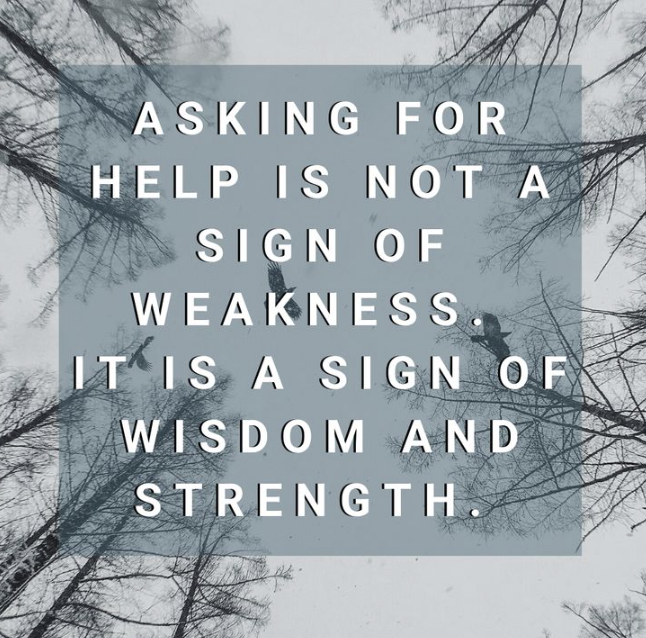
I want us to build a community where people matter more than their companies, where success isn't measured at the expense of our wellbeing, and where asking for help is a sign of strength—not weakness.
That starts with each of us.
It starts with talking more openly about our own struggles.
It starts with making space for others to do the same.
And sometimes, it starts with something as simple as picking up the phone and saying:
"Hey brother. Just checking in. How are you REALLY doing?"
You might be surprised by the conversation that follows.
Be kind to yourselves, and to each other.
With gratitude and big bear hugs,
Dave
If you or someone you know is struggling or thinking about suicide, call or text 988 in the United States for free, confidential support, 24/7. Veterans can dial 988 and press 1. You don't have to navigate a crisis alone.
